Lutheran liturgy, deeply rooted in historical worship practices, provides a structured framework for encountering God’s grace.
Resources like the Lutheran Service Book and Common Service Book, available as PDFs, guide these services.
These books contain prayers, hymns, and orders of worship central to Lutheran tradition.
Historical Context of Lutheran Liturgy
Lutheran liturgy emerged from the 16th-century Reformation, a deliberate return to the early Church’s worship practices. Martin Luther, seeking to reform perceived abuses, drew heavily from the liturgical traditions of the Western Church, particularly those found in the medieval Mass.
Early Lutheran worship retained elements like the Kyrie, Gloria, and Credo, but emphasized vernacular language and a greater emphasis on the proclamation of the Word. The first complete Lutheran order of worship appeared in 1526.
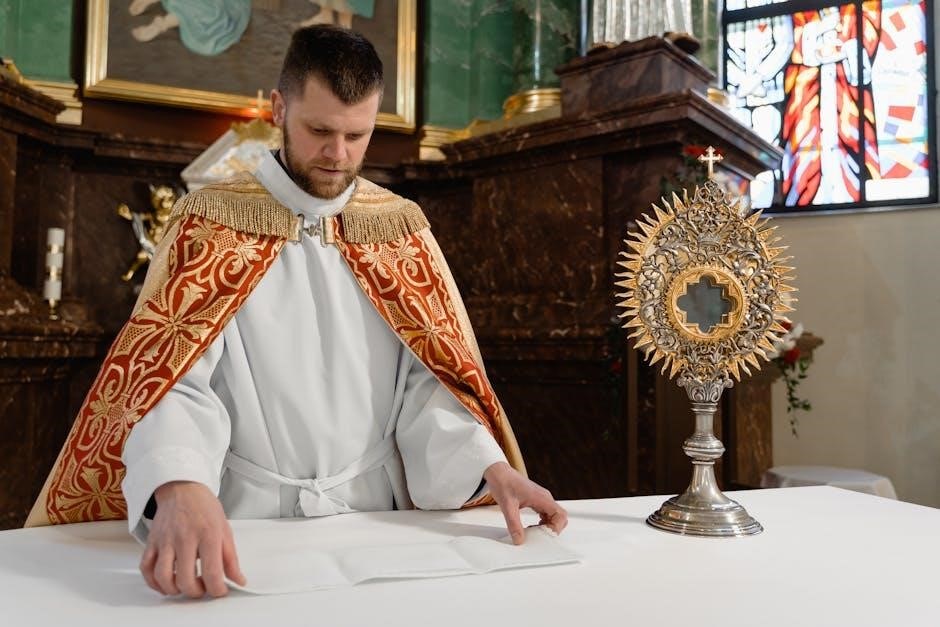
Over time, various liturgical books developed, including the Common Service Book (early 20th century) and, later, the Lutheran Service Book. These resources, now often available as PDFs, reflect centuries of liturgical development and theological refinement within the Lutheran tradition, offering a continuous link to its historical roots.
Theological Foundations of Lutheran Worship
Lutheran worship is profoundly shaped by its theological convictions, particularly the doctrine of justification by grace through faith. The liturgy emphasizes God’s initiative in salvation, with humans receiving God’s gifts offered in Word and Sacrament.
Central to Lutheran theology is the “real presence” of Christ in Holy Communion – not merely a symbolic remembrance, but a true participation in Christ’s body and blood. This belief informs the reverence and solemnity surrounding the Eucharist.
The liturgy’s structure reflects a dialogical relationship between God and His people, with prayers, hymns, and readings responding to God’s gracious revelation. Resources like the Lutheran Service Book, accessible as a PDF, embody these theological principles, guiding worshipers into a deeper encounter with God’s saving work.

Key Lutheran Liturgical Books
Lutheran worship relies on essential books like the Lutheran Service Book and Common Service Book, often found as PDF downloads.
These resources provide the core elements for liturgical practice.
The Lutheran Service Book (LSB)
The Lutheran Service Book (LSB) stands as a cornerstone of worship for many Lutheran congregations. This comprehensive hymnal and service book, available in various formats including PDFs, offers a rich collection of resources for the Divine Service.
It contains over 636 hymns, songs, and canticles, alongside 150 psalms, providing a vast repertoire for musical praise.
Beyond music, the LSB includes the complete liturgical services, responsive readings, catechisms, and prayers, making it a complete resource for pastors and congregations alike.
Published by Concordia Publishing House, the LSB aims to nourish the faithful through Christ-centered worship for generations.
Its availability in digital formats enhances accessibility for study and preparation.
Content Overview of the LSB
The Lutheran Service Book (LSB) boasts a meticulously curated content selection, readily accessible in PDF format for convenient study and use. It features five Divine Service settings, offering variety in worship style.
Central to the LSB are its extensive musical offerings: 636 hymns, encompassing both classic and contemporary compositions, alongside a collection of 150 Psalms set to music.
Beyond musical elements, the LSB provides complete orders of worship, responsive readings, and a wealth of prayers for various occasions.
It also includes essential doctrinal resources like the Lutheran Confessions and catechisms, solidifying its role as a comprehensive liturgical and theological guide.
Editions of the Lutheran Service Book (Pew, Personal/Gift)
The Lutheran Service Book (LSB) is available in several editions to suit diverse needs, with digital PDF versions complementing the physical copies. The Pew Edition, designed for congregational use, is a standard size for church pews.
For individual devotion and study, the Personal/Gift Edition offers a more compact and elegant format. This edition features over 600 hymns spanning centuries and continents, providing a rich tapestry of worship music.
Both editions contain the core content – Divine Services, Psalms, hymns, prayers – ensuring consistency in liturgical practice. The Gift Edition makes a thoughtful present for those engaged in Lutheran worship and theological exploration.
The Common Service Book
The Common Service Book represents a significant historical resource for Lutheran worship, compiled by the United Lutheran Church in America and related bodies. Remarkably, this foundational text is readily accessible today as a PDF through both Google Books and Internet Archive, offering both text-only and text-with-music versions.
Issued jointly by several Lutheran synods, it provides a comprehensive collection of prayers and liturgical materials. Its availability online ensures preservation and broad access for scholars, musicians, and worshippers alike.
Containing 310 and 631 pages, it’s a substantial work reflecting the liturgical practices of its time.
Availability of the Common Service Book (Archive.org, Google Books)
Accessing the Common Service Book is remarkably convenient in the digital age, thanks to initiatives preserving liturgical resources as PDFs. Both Archive.org and Google Books host complete digital copies, ensuring broad accessibility for anyone interested in Lutheran liturgical history and practice.
Google Books offers versions with both text and musical notation, catering to musicians and those who appreciate the full worship experience. Archive.org similarly provides options for both text-only and text-with-music viewing and download.
This digital availability facilitates research and personal study.
Historical Significance of the Common Service Book
The Common Service Book holds immense historical weight within Lutheranism, representing a significant effort toward liturgical unity among various American Lutheran bodies. Issued jointly by several synods – including the General Synod of the Evangelical Lutheran Church in the United States of America – it aimed to standardize worship practices in the early 20th century.
Containing a comprehensive collection of prayers and liturgical forms, it served as a foundational text for generations of Lutheran worship leaders.
Its availability as a PDF today allows scholars and practitioners to study its influence on the development of Lutheran liturgy.

Structure of a Lutheran Divine Service
A Lutheran Divine Service follows a distinct order: Introit, Confession, Kyrie, Gloria, Collect, Readings, and culminates in Holy Communion.
PDF resources detail this structure.
The Introit and Confession
The Introit, a psalm verse, initiates the service, setting a meditative tone and focusing the congregation on God’s Word. Often found within Lutheran liturgy PDF resources, it’s a call to worship and a declaration of God’s presence.
Following the Introit is the Confession of Sins, a crucial element acknowledging human fallibility and need for divine forgiveness. This communal confession, detailed in service books available as PDFs, leads to the declaration of absolution by the pastor.
These opening moments establish a humble and receptive atmosphere, preparing hearts for the proclamation of the Gospel and participation in the sacraments. The precise wording and musical settings for both the Introit and Confession are readily accessible in liturgical materials.
The Kyrie and Gloria
Following the confession, the Kyrie (“Lord, have mercy”) is chanted or sung, a plea for God’s compassion and forgiveness. This ancient invocation, often found in Lutheran liturgy PDFs, acknowledges humanity’s desperate need for grace.
The Gloria in Excelsis (“Glory to God in the highest”) then bursts forth as a joyful hymn of praise, celebrating God’s majesty and goodness. Both the Kyrie and Gloria, detailed in liturgical books available as PDF downloads, are traditionally sung or recited responsively.
These hymns create a dynamic shift from lament to adoration, preparing the congregation for the Collect and the proclamation of God’s Word. Their musical settings vary, enriching the worship experience.
The Collect and Readings
The Collect, a concise prayer gathered from the rich tradition of the Church, follows the Kyrie and Gloria. Found within Lutheran liturgy PDF resources, it petitions God for specific blessings related to the day’s theme.
Subsequently, Scripture Readings – typically an Old Testament lesson, an Epistle, and the Gospel – are proclaimed. These readings, often outlined in service books available as PDFs, narrate God’s saving acts throughout history.
The Gospel reading holds a place of prominence, as it directly reveals the person and work of Jesus Christ. These elements, carefully selected and arranged, guide the congregation towards a deeper understanding of God’s will.
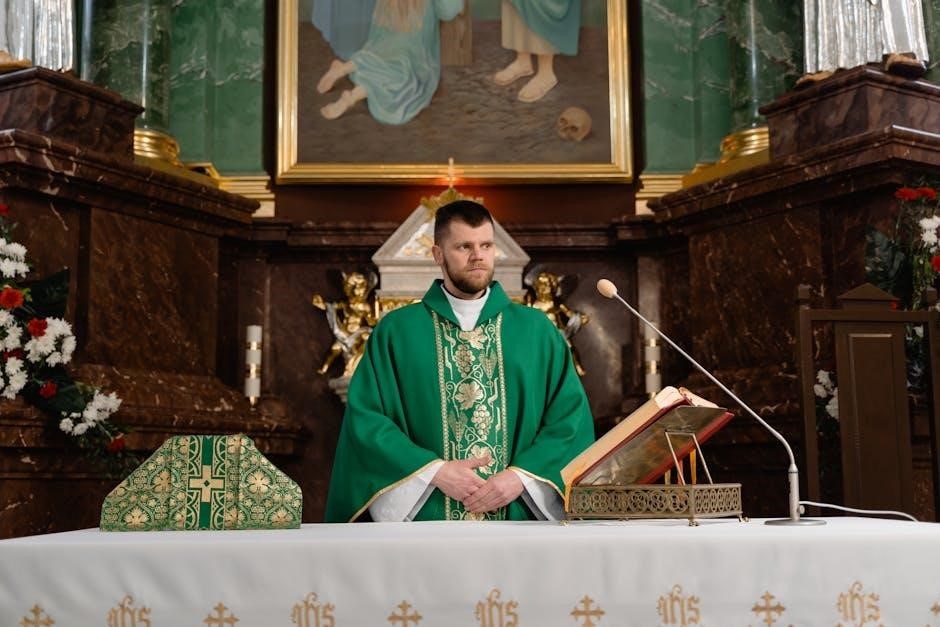
The Central Act: Holy Communion
Holy Communion, the heart of Lutheran worship, is detailed in liturgy PDFs.
It’s a sacred meal where believers receive Christ’s body and blood for forgiveness and strength.
The Preface and Sanctus
The Preface, found within Lutheran liturgy PDFs, is a beautiful and theologically rich prayer of thanksgiving preceding the Words of Institution. It prepares the congregation to receive the sacrament, recalling God’s saving work through Christ.
Immediately following the Preface is the Sanctus, a hymn of praise drawn from Isaiah 6 and the Gospels, proclaiming “Holy, Holy, Holy Lord God of Hosts.” This ancient hymn, often sung or chanted, acknowledges God’s majesty and holiness.
Both elements, detailed in liturgical resources, elevate the worship experience, focusing hearts and minds on the sacredness of the moment and the divine mystery of Holy Communion. They are integral parts of the Lutheran Divine Service;
The Words of Institution
The Words of Institution, meticulously preserved in Lutheran liturgy PDFs, are the core of the Holy Communion service. These are the very words Jesus used at the Last Supper – “This is my body…This is my blood” – establishing the sacrament.
Lutherans believe these words aren’t merely a symbolic remembrance, but a powerful declaration where Christ truly gives His body and blood for us for the forgiveness of sins.
The pastor proclaims these words, connecting the present moment with that pivotal event in salvation history. This act, central to Lutheran theology, is found within the Lutheran Service Book and other liturgical guides, emphasizing the real presence of Christ in the Eucharist.
Distribution of Holy Communion
Distribution of Holy Communion, detailed in Lutheran liturgy PDF resources like the Lutheran Service Book, follows the Words of Institution. Communicants approach the altar, receiving both the consecrated bread and wine – Christ’s body and blood.
Lutherans practice “close communion,” generally receiving communion with those who share a confession of faith. The pastor and assisting ministers distribute the elements with reverence, often accompanied by words of invitation and blessing.
This act isn’t merely a ritual, but a deeply personal encounter with Christ’s sacrifice. Liturgical guides provide rubrics for orderly distribution, ensuring all participants experience the grace offered in this central sacrament, strengthening their faith.
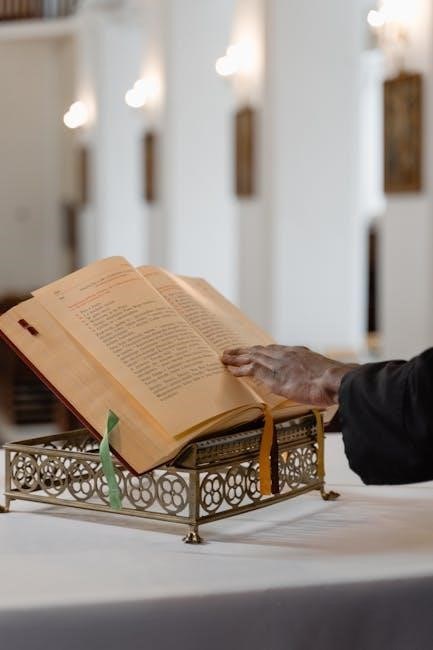
Hymns and Psalms in Lutheran Worship
Hymns and Psalms are integral to Lutheran worship, with the Lutheran Service Book offering 636 selections. PDF versions facilitate congregational singing and devotional practice.
The Role of Hymnody
Hymnody occupies a central position within Lutheran worship, functioning as a powerful means of theological instruction and heartfelt praise. Hymns aren’t merely additions to the service; they are a vital part of it, conveying doctrine and fostering a communal experience of faith.
The Lutheran Service Book (LSB), readily available in PDF format, showcases this rich tradition, containing over 600 hymns spanning centuries and continents. These aren’t simply songs, but lyrical theologies set to music, allowing the congregation to actively participate in proclaiming God’s Word.
Furthermore, hymns connect believers to the historical witness of the Church, drawing upon the legacy of composers and theologians. Accessing the LSB as a PDF allows for personal study and deeper engagement with the theological depth embedded within each verse.
Selection of Psalms and Hymns (LSB’s 636 hymns)
The Lutheran Service Book (LSB) boasts an impressive collection of 636 hymns, alongside 150 Psalms, carefully curated to reflect the breadth of Scripture and the Lutheran theological understanding. Selection isn’t arbitrary; hymns are chosen to complement the appointed readings and the liturgical season, enhancing the thematic unity of the Divine Service.
Accessing the LSB as a PDF facilitates exploration of this vast repertoire. The hymnal includes both classic hymns and more contemporary expressions of faith, offering a balance between tradition and renewal.
This deliberate selection process ensures that the hymnody consistently proclaims the Gospel, reinforces core doctrines, and invites congregational participation in worship. The PDF version allows for easy searching and study of these treasured resources.

Liturgical Music and its Importance
Liturgical music, particularly organ and choral traditions, profoundly enriches Lutheran worship.
PDF resources like the LSB provide musical settings for hymns and service music, elevating the worship experience.
Organ Music in Lutheran Services
Organ music holds a central and historically significant place within Lutheran Divine Services. Often, the organ doesn’t merely accompany the hymns, but actively leads the congregation in worship through preludes, interludes, and postludes.
The instrument’s versatility allows for a wide range of musical expression, from majestic hymn accompaniments to intricate compositions that reflect the theological themes of the liturgy. Many Lutheran Service Book (LSB) editions, available as PDFs, include organ accompaniment parts.
These PDF resources enable organists to faithfully render the music intended to enhance the worship experience. The organ’s powerful sound and rich timbre create an atmosphere conducive to prayer and reverence, deeply rooted in the Lutheran tradition.
Choral Music Traditions
Choral music has long been a cornerstone of Lutheran worship, deeply intertwined with the theological emphasis on congregational singing and the proclamation of the Gospel. Lutheran composers, influenced by the Reformation, developed rich choral traditions, often utilizing hymn tunes and scriptural texts.
These traditions continue today, with choirs performing anthems, motets, and arrangements of hymns during the Divine Service. Access to choral scores and arrangements is often facilitated through resources like the Lutheran Service Book, frequently available as a PDF.
These PDF resources provide valuable tools for church musicians, enabling them to enrich the worship experience with beautiful and theologically sound choral offerings.
Resources for Lutheran Liturgy PDFs
Lutheran liturgy PDFs are readily accessible through Archive.org and Google Books, offering the Common Service Book and other liturgical materials digitally.
Concordia Publishing House also provides resources.
Online Archives and Digital Libraries
Internet Archive stands as a crucial resource for accessing historical Lutheran liturgical texts in PDF format. The Common Service Book of the Lutheran Church is freely available there, offering both text-only and text-with-music versions, allowing for comprehensive study and use.

Similarly, Google Books provides digital access to the Common Service Book, again in both text and musical notation formats. These digital libraries democratize access to these important liturgical resources, making them available to a global audience without cost.
Researchers, musicians, and worshippers alike can benefit from these online archives, preserving and disseminating Lutheran liturgical heritage for generations to come. These platforms ensure the continued availability of these foundational texts.
Concordia Publishing House Resources
Concordia Publishing House is a primary publisher of Lutheran liturgical materials, offering resources both in print and potentially in digital PDF formats, though direct PDF availability varies. The Lutheran Service Book (LSB), available in Pew Edition and Personal/Gift Edition formats, is a cornerstone of Lutheran worship.
While complete LSB PDFs may require purchase, Concordia offers supplemental materials and previews online. Their catalog includes hymnals, service books, and related musical resources. Exploring their website reveals a wealth of information about Lutheran worship practices and available publications.
Concordia also publishes The Lutheran Confessions – A Reader’s Edition of the Book of Concord, which provides theological context for the liturgy. These resources support vibrant and faithful Lutheran worship.

Variations in Lutheran Liturgical Practice
Lutheran liturgical practice differs between denominations like the LCMS and ELCA, influencing service styles and PDF resource selection.
Traditional and contemporary approaches both utilize core liturgical elements.
Differences Between LCMS and ELCA Liturgies
Lutheran Church–Missouri Synod (LCMS) and Evangelical Lutheran Church in America (ELCA) liturgies, while sharing a common heritage, exhibit notable differences. The LCMS generally favors a more traditional, confessional approach, emphasizing the historic Lutheran Liturgy and often utilizing the Lutheran Service Book (LSB), readily available as a PDF. This reflects a commitment to unchanging doctrine and worship.
Conversely, the ELCA often embraces more contemporary expressions of worship, allowing for greater flexibility and incorporating diverse musical styles. While also utilizing liturgical resources, the ELCA may adapt or supplement them to suit congregational preferences. Access to these variations can be found through online archives and potentially as PDF downloads, showcasing the breadth of Lutheran worship styles. These differences stem from varying theological emphases and approaches to liturgical renewal.
Contemporary vs. Traditional Liturgical Styles
Lutheran liturgical practice spans a spectrum from deeply traditional to decidedly contemporary. Traditional styles, often found with the Lutheran Service Book (LSB) – accessible as a PDF – prioritize historic forms, reverent language, and established hymnody. These services emphasize continuity with the Church’s past and a sense of solemnity.
Contemporary styles, however, seek to connect with modern sensibilities. This may involve updated language, diverse musical arrangements (beyond traditional hymns), and more participatory elements. While still rooted in the core liturgical structure, these services aim for accessibility and relevance. Both styles can be found documented in various resources, sometimes available as PDFs, demonstrating the evolving nature of Lutheran worship while maintaining core theological principles.