Exam Overview and Format

The AP Physics exam tests conceptual understanding and problem‑solving across mechanics, electricity, waves, and modern physics. It features multiple‑choice (80 questions, 90 min) and free‑response sections (4 problems, 60 min). Scoring blends objective and rubric‑based points. Students use past‑exam PDFs daily
Exam Structure and Scoring Rubric
AP Physics exams are divided into two main sections: a 90‑minute multiple‑choice portion and a 60‑minute free‑response portion. The multiple‑choice section contains 80 questions, each worth one point, and is scored on a 0‑80 scale. The free‑response section includes four problems that require detailed written solutions; each problem is worth 10 points, with an additional 5 bonus points for exceptionally thorough work, yielding a 0‑45 scale; The final score is a weighted sum: 70 % from multiple‑choice and 30 % from free‑response, producing a composite score between 0 and 5. The College Board uses a rubric that evaluates conceptual clarity, correct application of physics principles, and mathematical accuracy. Students are encouraged to practice with past‑exam PDFs and official scoring guidelines to align their responses with the rubric’s expectations. Accurate time management and clear, step‑by‑step explanations are essential for maximizing points in both sections. The scoring rubric for free‑response problems emphasizes clarity of reasoning, correct use of equations, and proper units. Each problem is broken into sub‑criteria: conceptual understanding, quantitative analysis, and presentation. Points are awarded for correct final answers, intermediate steps, and error analysis. The rubric also rewards concise, logically organized solutions. For multiple‑choice, the College Board provides a detailed key that explains why each distractor is incorrect, helping students learn common misconceptions. Time allocates 1.5 minutes per multiple question and 15 minutes per free‑response problem.
Question Types: Multiple Choice, Free Response, Fermi Problems
AP Physics exam questions come in three distinct formats, each probing a different facet of mastery. The first format is multiple‑choice, with 80 items testing quick recognition of concepts, algebraic manipulation, and formula application. Each question offers five answer choices, and the correct choice best satisfies the problem’s conditions. The second format is free‑response, featuring four problems that require a written, step‑by‑step solution. Students must articulate reasoning, show all calculations, and justify each step with physics principles. The third format is the Fermi problem, a short, estimation‑based question that challenges students to make reasonable approximations and use back‑of‑the‑envelope calculations to arrive at a plausible answer. Fermi problems require integration of multiple concepts, creative thinking, and the ability to simplify complex systems into manageable calculations. Mastery of all three formats—quick recall, detailed explanation, and creative estimation—constitutes the core of AP Physics exam success.
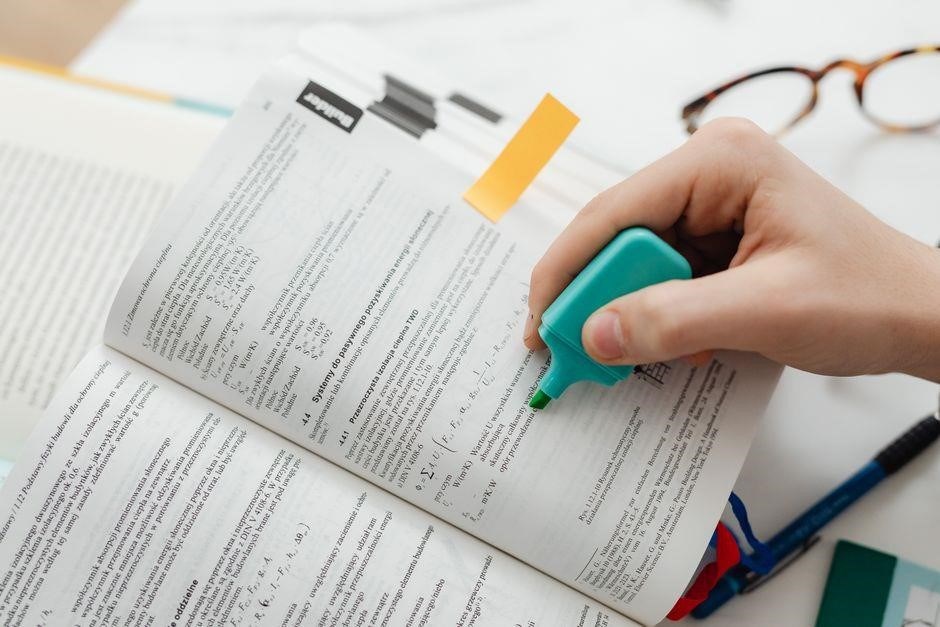
often find that the most effective preparation strategy involves alternating between timed practice sessions for multiple‑choice drills, in‑depth review of free‑response solutions, and regular Fermi‑style estimation exercises. By cycling through these formats, learners build a robust mental toolkit: rapid pattern recognition for the 90‑minute multiple‑choice segment, systematic problem‑solving for the 60‑minute free‑response portion, and intuitive scaling skills for Fermi questions. Additionally, the College Board’s official scoring rubric for free‑response problems highlights three key dimensions: conceptual understanding, quantitative accuracy, and presentation quality. Each dimension carries equal weight, so a well‑organized solution that demonstrates both the physics behind the answer and the numerical work will score higher than a terse answer that omits justification. For Fermi problems, the rubric emphasizes the plausibility of assumptions, the logical flow of the estimation, and the final answer’s proximity to realistic values. Practicing with past‑exam PDFs and the College Board’s free‑response key allows students to benchmark their performance against the rubric’s expectations and identify specific areas for improvement.
Filler text.Filler text.Filler text.Filler text.Filler text.Filler text.Filler text.Filler text.Filler text.Filler text.Filler text.Filler text.Filler text.Filler text.Filler text.Filler text.Filler text.Filler text.Filler text.Filler text.Filler text.Filler text.Filler text.Filler text.Filler text.Filler text.Filler text.Filler text.Filler text.Filler text.Filler text.Filler text.

Core Content Areas
Core content covers mechanics (kinematics, dynamics, work), electricity & magnetism (circuits, fields, EM waves), waves & oscillations, and modern physics (atomic, nuclear, particle). Mastery of these areas is essential for exam success.
These topics interlink, conceptual depth skill. Practice with past exams boosts confidence!
Mechanics: Kinematics, Dynamics, Work-Energy
Students must master kinematics equations, vector addition, and projectile motion. Dynamics focuses on Newton’s laws, force diagrams, and friction. Work‑energy concepts include kinetic and potential energy, power, and conservation laws. Problem sets from AP Physics 1 Study Guide and UWorld provide practice on free‑response scenarios. Key resources: AP Physics Exam Secrets Study Guide, AP Physics 1 Practice Questions, and Barron’s AP Physics C Premium. Khan Academy offers interactive tutorials; College Board’s AP Classroom offers formative quizzes. Reviewing past exam PDFs reveals common question patterns. Mastery of these fundamentals is essential for scoring high on the AP exam. Students should practice vector decomposition, resolve forces, and apply energy conservation to complex systems. Calculating work done by non‑conservative forces, analyzing power output, and solving for acceleration in multi‑body systems are common exam tasks. The AP Physics 1 Study Guide offers worked examples, while UWorld provides timed practice sets that mimic the exam’s pacing. Khan Academy’s interactive labs allow students to visualize motion graphs, force vectors, and energy flow, reinforcing theoretical concepts with hands‑on experimentation. The College Board’s AP Classroom provides diagnostic quizzes that highlight weak areas, enabling targeted review before the exam. Consistent practice with timed free‑response problems, coupled with thorough analysis of model answers, is the key to mastering the mechanics section and achieving a top score. Remember, the exam rewards so reasoning and calculations!
Electricity & Magnetism: Circuits, Fields, EM Waves
Students must understand Ohm’s law, series and parallel circuits, Kirchhoff’s rules, and power calculations. Electric fields and potentials are explored through point charges, Gaussian surfaces, and capacitance. Magnetic field concepts include the Lorentz force, magnetic flux, and Faraday’s law of induction. Wave behavior is examined via interference, diffraction, and polarization. The AP Physics 1 Study Guide offers detailed explanations, worked examples, and practice problems that align with the College Board’s exam format. UWorld’s first‑edition guide provides timed drills that emphasize conceptual reasoning and quantitative skills. Barron’s AP Physics C Premium supplies comprehensive review sections and free‑response solutions, while Khan Academy’s interactive modules allow students to visualize field lines, simulate circuit behavior, and animate wave propagation. College Board’s AP Classroom offers formative quizzes that target weak areas in electromagnetism. Reviewing past exam PDFs reveals common question patterns, such as calculating induced EMF in rotating coils or analyzing the energy stored in a capacitor. Mastery of these topics is essential for a high score on the AP exam. Students should also practice interpreting circuit diagrams, calculating equivalent resistances, and applying Kirchhoff’s voltage and current laws to complex networks, as these skills frequently appear in the free‑response section and help solidify conceptual understanding. Additionally, reviewing the rubric for free‑response questions helps students allocate points for calculation!!
Waves, Oscillations, and Vibrations
Students must master harmonic motion, driven oscillators, resonance, and wave phenomena such as reflection, refraction, interference, and diffraction. The AP Physics 1 Study Guide offers concise explanations of angular frequency, amplitude, phase, and energy transfer in oscillatory systems. UWorld’s first‑edition guide provides timed practice problems that emphasize phase relationships and resonance curves, while Barron’s AP Physics C Premium supplies in‑depth derivations of the wave equation and detailed free‑response solutions. Khan Academy’s interactive modules allow learners to visualize sinusoidal motion, animate standing waves, and manipulate parameters to observe changes in frequency and wavelength. College Board’s AP Classroom offers formative quizzes that target common misconceptions about phase shifts and energy conservation in oscillatory systems. Reviewing past exam PDFs reveals frequent questions on calculating the period of a mass‑spring system, determining the speed of a wave on a string, and analyzing the conditions for constructive interference. Mastery of these concepts is essential for scoring well on the free‑response section and for demonstrating a deep understanding of wave mechanics. should practice deriving the relationship between angular frequency and period, solving for displacement as a function of time, and applying the principle of superposition to complex wave patterns. Additionally, reviewing the rubric for free‑response questions helps students allocate points for calculation, explanation, and interpretation of results.
Modern Physics: Atomic, Nuclear, Particle Physics
Students must master the quantum model, energy levels, spectral lines, photoelectric effect, Compton scattering, nuclear decay, binding energy, and particle interactions. The AP Physics 1 Study Guide explains Bohr’s model, de Broglie wavelength, and the uncertainty principle with worked examples linking theory to exam questions. UWorld’s first‑edition guide offers timed practice on electron transitions, photon energy calculations, and decay chains, emphasizing logarithmic decay equations and half‑life concepts. Barron’s AP Physics C Premium provides derivations of mass‑energy equivalence, free‑response solutions for nuclear reactions, and Fermi problems involving particle collisions. Khan Academy’s interactive modules let learners visualize atomic orbitals, simulate energy‑level diagrams, and explore conservation of momentum in particle decays. College Board’s AP Classroom hosts quizzes targeting misconceptions about binding energy per nucleon and differences between alpha, beta, and gamma emissions. Reviewing past PDFs shows frequent questions on calculating fission energy, determining photon wavelengths from electronic transitions, and analyzing scattering experiments. Mastery of these concepts is essential for scoring well on free‑response questions and demonstrating deep understanding. Students should practice deriving energy‑wavelength relationships, solving for decay constants, and applying conservation laws to particle interactions. Additionally reviewing the rubric helps allocate points for calculation, explanation, and interpretation. The guide emphasizes cross‑section in scattering, mean free path, and Beer‑Lambert law for photon absorption. It covers particle detectors like scintillators and cloud chambers, explaining how data confirm theoretical predictions. Students are encouraged to solve problems calculating neutron capture probability, estimating muon lifetimes, and interpreting Rutherford scattering results. By mastering these advanced topics, students gain a framework for tackling multiple‑choice and free‑response questions that test their ability to apply modern physics concepts!

Study Resources
AP Physics study guides like AP Physics 1 Study Guide, UWorld, Barron’s, and Khan Academy offer practice, explanations, and past exams. College Board PDFs and free problem sets sharpen skills. Use flashcards, timed quizzes, and rubric‑aligned solutions for mastery.
Daily practice.
Textbooks and Study Guides (e.g., AP Physics Exam Secrets, UWorld, Barron’s)
AP Physics Exam Secrets offers concise reviews, high‑yield questions, and detailed explanations, ideal for quick concept checks. UWorld’s first‑edition guide delivers extensive practice sets with adaptive feedback, emphasizing conceptual depth and exam‑style reasoning. Barron’s AP Physics 1 provides comprehensive coverage, including full practice exams, step‑by‑step solutions, and strategic test‑taking tips. All three resources feature clear organization, color‑coded sections, and downloadable PDFs, allowing students to focus on weak areas and track progress. Combining these guides with active problem solving and timed drills maximizes retention and builds confidence for the AP exam. Each guide includes diagnostic quizzes that pinpoint conceptual gaps, allowing targeted review. The interactive online components provide instant feedback and adaptive practice. Students report higher confidence after completing the full set of practice exams, as the guides mirror the exam’s pacing and question style. Supplementing with flashcards and group study sessions further reinforces retention and application skills. By integrating these resources into a structured study schedule—allocating dedicated time for concept review, practice problem sets, and timed mock exams—students can systematically track progress, identify persistent misconceptions, and adjust their preparation strategies, achieving mastery of foundations and theoretical core exam!

Online Practice Platforms (Khan Academy, College Board, AP Classroom)

Khan Academy offers a free, interactive curriculum that mirrors the AP Physics syllabus, featuring video lessons, practice quizzes, and instant feedback. The College Board’s AP Classroom portal provides official practice questions, formative assessments, and a detailed progress dashboard that tracks mastery of each unit. AP Classroom also hosts the full set of past exam free‑response questions with model answers, enabling students to benchmark their analytical writing skills. Combining these platforms allows learners to alternate between conceptual video reviews, timed multiple‑choice drills, and rigorous free‑response practice. The adaptive nature of Khan Academy’s algorithm recommends targeted exercises based on performance, while College Board’s analytics highlight specific content gaps. Students can schedule regular review sessions, set weekly goals, and use the “Score Tracker” to monitor growth across mechanics, electricity, waves, and modern physics. Consistent use of these resources, supplemented by peer discussion forums, has been shown to improve test‑taking confidence and overall AP scores. Students should also review the College Board’s rubric for free‑response questions, practicing concise, well‑structured explanations that align with scoring criteria. Additionally, leveraging Khan Academy’s mastery challenges can help reinforce weak concepts before the exam. Finally, scheduling regular mock exams under timed conditions will build stamina and reveal pacing strategies success.!
Free Online Problem Sets and Solutions

Students seeking cost‑free, high‑quality practice can turn to several reputable online repositories that host AP Physics problem sets with full solutions. The College Board’s “Past Exam Question” archive offers downloadable PDFs of every free‑response and multiple‑choice question from 2004 to the present, complete with official answer keys and detailed model responses. These PDFs are ideal for timed drills and for studying the exact phrasing of exam questions. Another valuable resource is the AP Physics subreddit community, where users regularly share custom problem sets and step‑by‑step solutions, often accompanied by video explanations. The “Physics Stack Exchange” site also hosts a dedicated AP Physics tag; here, experts provide thorough solutions to user‑submitted practice problems, explaining reasoning and highlighting common pitfalls. For interactive practice, the “OpenStax Physics” website hosts a set of problem chapters that mirror the AP curriculum, each accompanied by a solution manual that can be accessed after a short registration. Finally, the “Khan Academy AP Physics” section offers thousands of practice problems across all units, with instant feedback and detailed solution videos. By cycling through these free repositories, students can build a comprehensive, self‑paced study routine that reinforces both conceptual understanding and quantitative skill. Students should also utilize the free, community‑generated problem sets on the AP Physics subreddit, where peers post detailed solutions and discuss approaches, collaborative learning deeper insight.!!!
Official College Board Resources and Past Exam PDFs

The College Board’s official website is the primary source for AP Physics study materials. Students can download every past‑exam PDF from 2004 onward, including both multiple‑choice and free‑response sections. Each PDF comes with an answer key that lists correct choices for the multiple‑choice questions and a detailed model response for the free‑response items. The College Board also offers the “AP Classroom” platform, which hosts interactive practice questions that mirror the exam format. These items are automatically graded, and students receive instant feedback that includes a breakdown of the scoring rubric. In the “AP Physics Study Guide” section, a curated list of past‑exam questions is organized by content area, making it easy to target specific units such as mechanics or electromagnetism. The “Student Guide” provides a review of the exam format, scoring guidelines, and sample questions with explanations. Additionally, the “AP Central” resource page offers downloadable “Exam Review” handouts that summarize key concepts and provide sample calculations, serving as a quick reference for exam day preparation. By using these official resources, students gain access to authentic exam material and reliable solutions, which are essential for mastering the AP Physics curriculum and achieving a high score.
Students can also access the College Board’s “Exam Review” handouts, which condense key formulas and conceptual summaries, and the “AP Physics Practice Exam” PDFs that simulate the full test environment. These resources are updated annually to reflect any changes in the curriculum, ensuring that practice remains aligned with the current exam expectations.