Lincoln AC 225 S Arc Welder Manual: A Comprehensive Guide
This manual details the Lincoln AC 225-S, covering setup, welding techniques, maintenance, and troubleshooting. It references available parts and addresses related vehicle issues.
The Lincoln AC 225-S is a robust and versatile arc welder, renowned for its dependability and ease of use. This machine has been a staple for both professional welders and hobbyists for decades. Its simple design allows for straightforward operation, making it ideal for a wide range of welding applications.
This manual serves as a comprehensive resource for understanding and operating your AC 225-S welder. We will explore its core functionalities, from initial setup and electrode selection to advanced welding techniques. Furthermore, we’ll delve into essential maintenance procedures and troubleshooting steps to ensure optimal performance and longevity. The manual also briefly touches upon contextual issues, like those found in Lincoln vehicles, for broader understanding.
Historical Context and Production Years
The Lincoln AC 225-S boasts a rich history, becoming a cornerstone of American welding since its introduction. While precise initial production dates are difficult to pinpoint, it gained prominence throughout the mid-20th century and continued in production for several decades. Its enduring popularity stems from its rugged construction and ability to handle diverse welding tasks.
The AC 225-S’s longevity is a testament to its design. Though specific production end dates vary, it remained a consistent offering in Lincoln Electric’s lineup for a substantial period. Even today, many units remain in service, supported by readily available parts. This welder’s historical significance is reflected in its continued relevance within the welding community.
Key Features and Specifications
The Lincoln AC 225-S is renowned for its versatility, offering both AC and DC welding capabilities. It delivers a maximum output of 225 amps on AC and 125 amps on DC, suitable for a wide range of materials and thicknesses. Key features include a robust transformer, providing stable power, and adjustable voltage control for precise arc tuning.
Specifications include a 230V input voltage, and a typical duty cycle of around 20% at its maximum amperage. The unit’s portability is enhanced by its relatively compact size and weight. Its simple design contributes to its reliability and ease of maintenance, making it a favorite among both professionals and hobbyists.

Understanding the Welder Components
The AC 225-S comprises a transformer, rectifier, voltage control, and amperage settings. These elements work together to deliver controlled welding power efficiently.
Transformer and Rectifier
The Lincoln AC 225-S utilizes a robust transformer to step down the incoming voltage to a level suitable for arc welding. This transformer is central to the welder’s operation, providing the necessary power conversion.
Furthermore, the unit incorporates a rectifier, enabling DC welding capabilities alongside the standard AC output. The rectifier converts alternating current into direct current, expanding the welder’s versatility for various applications.
Understanding the interplay between the transformer and rectifier is crucial for optimizing welding performance. Proper functioning of these components ensures stable arc characteristics and consistent weld quality. Regular inspection and maintenance are vital for their longevity.
Voltage Control and Amperage Settings
The Lincoln AC 225-S features a tap-changing voltage control, allowing the operator to select the appropriate voltage for different electrode types and material thicknesses. This control directly influences the arc length and penetration.
Amperage settings are adjusted in conjunction with voltage, dictating the welding current. Higher amperage is needed for thicker materials and larger electrodes. Precise adjustment of both voltage and amperage is essential for achieving optimal weld quality.
Understanding the relationship between these settings and their impact on the weld bead is critical. Experimentation and reference charts aid in selecting the correct parameters for specific welding tasks.
Duty Cycle and Overload Protection
The Lincoln AC 225-S, like all arc welders, operates within a defined duty cycle. This represents the percentage of time it can weld continuously at a given amperage without overheating. Exceeding the duty cycle triggers the overload protection system.
This protection, typically a thermal overload switch, shuts down the welder to prevent damage. The manual specifies duty cycle ratings for various amperage outputs; Allowing the welder to cool before resuming operation is crucial.
Understanding and respecting the duty cycle ensures longevity and prevents premature failure of the transformer and other internal components.
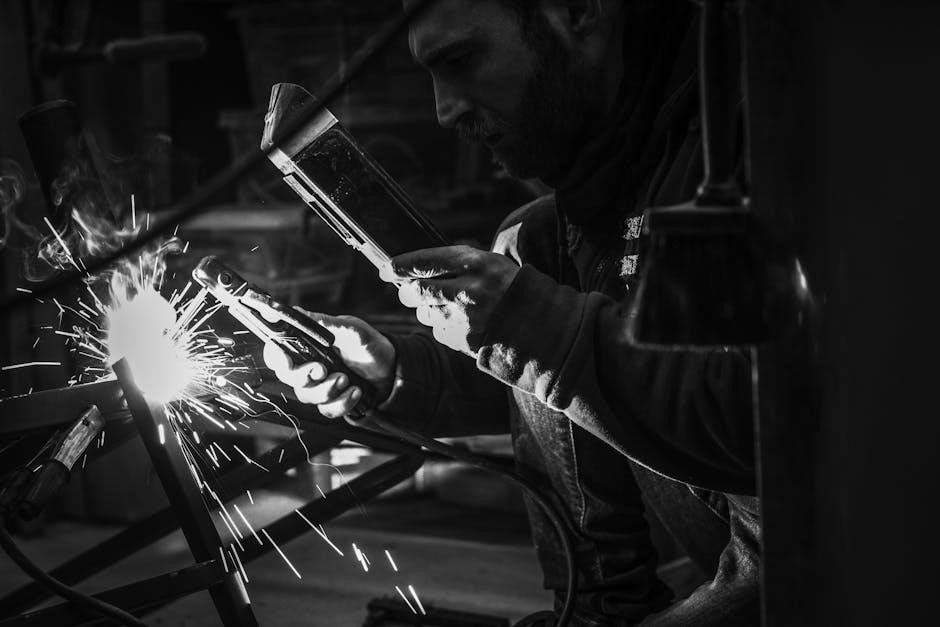
Setting Up the AC 225 S for Welding
Proper setup involves secure grounding, correct electrode selection, and ensuring firm cable connections for safe and effective operation of the AC 225-S welder.
Grounding Procedures
Establishing a solid ground is paramount for welder safety and arc stability; Connect the ground clamp directly to the workpiece, ensuring a clean, metal-to-metal contact – remove any paint, rust, or coatings. Utilize the shortest possible ground cable length to minimize resistance and voltage drop.
Inspect the ground clamp regularly for damage or corrosion, replacing it if necessary. A poor ground can lead to erratic arc behavior, increased spatter, and potentially dangerous electrical shock. Always connect the ground before making any welding connections.
For mobile applications, ensure the welder frame is also grounded to a known earth ground. This provides an additional layer of safety and helps prevent stray voltage. Proper grounding is not merely a recommendation; it’s a critical safety requirement.
Electrode Selection Guide
Choosing the correct electrode is crucial for successful welding with the Lincoln AC 225-S. Electrode selection depends on the material being welded, its thickness, and the desired weld characteristics. For mild steel, E6010 and E7018 electrodes are common choices, offering good penetration and strength.
E6011 electrodes are suitable for rusty or dirty steel, while E7018 provides a softer arc and less spatter. Consider the amperage range specified on the electrode packaging and adjust the welder accordingly.
For thicker materials, larger diameter electrodes are needed to achieve adequate weld penetration. Always store electrodes in a moisture-proof container to prevent hydrogen embrittlement, which can weaken the weld.
Proper Cable Connections
Secure and correct cable connections are vital for safe and efficient operation of the Lincoln AC 225-S. Begin by ensuring the work cable is firmly clamped to the workpiece, making solid metal-to-metal contact, removing any paint or rust for a good connection.
Attach the electrode holder cable to the electrode, ensuring a tight grip. Cables should be free from damage – cracks, exposed wires, or worn insulation must be addressed immediately.
Keep cables neatly arranged to prevent tripping hazards and ensure smooth operation. Proper connections minimize voltage drop and deliver consistent welding power.
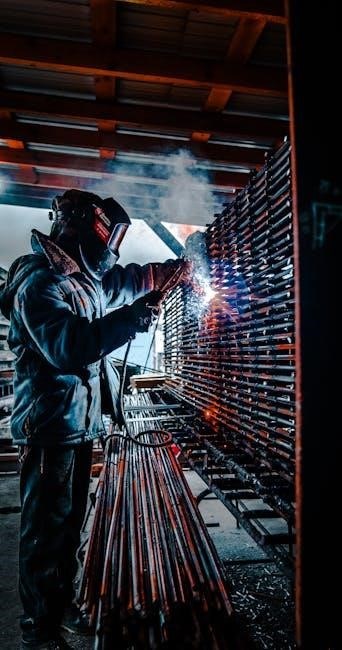
Welding Techniques with the AC 225 S
Mastering stick (SMAW), DC, and AC welding with the AC 225-S requires understanding proper settings and techniques for various metals and applications.
Stick Welding (SMAW) Techniques
Shielded Metal Arc Welding (SMAW), commonly known as stick welding, is a versatile process well-suited for the Lincoln AC 225-S. Achieving quality welds demands careful technique. Begin by selecting the appropriate electrode for the material being welded, considering thickness and desired weld characteristics.
Maintain a consistent arc length – typically equal to the electrode diameter – for stable welding. Employ a slight drag angle, moving the electrode along the joint at a steady pace. Proper manipulation, such as weaving or stringer beads, influences weld bead shape and penetration.
Adjust amperage based on electrode type and material thickness; lower amperage for thinner materials, higher for thicker ones. Practice striking and maintaining a consistent arc, minimizing spatter and ensuring full fusion. Remember to observe safety precautions throughout the process.
DC Welding Applications
The Lincoln AC 225-S, when configured for DC welding, expands its capabilities for specific materials and applications. Direct Current Electrode Negative (DCEP), also known as DCEN, concentrates heat on the workpiece, ideal for welding thicker materials like steel. This polarity provides deeper penetration and narrower weld beads.
Conversely, Direct Current Electrode Positive (DCIP) or DCER, delivers more heat to the electrode, suitable for thinner metals and certain alloy steels. DC welding generally offers improved arc stability and control compared to AC, resulting in cleaner, higher-quality welds.
Proper electrode selection and amperage settings are crucial for optimal DC welding performance. Always consult electrode manufacturer recommendations for specific applications.
AC Welding Applications
The Lincoln AC 225-S excels in AC welding, particularly with electrodes like 6013 and 7018. Alternating Current provides a self-cleaning arc, effectively removing slag and impurities during the welding process. This makes it well-suited for welding dirty or rusty steel, common in repair work.
AC welding offers a broader, flatter weld bead compared to DC, beneficial for applications requiring wider coverage. The oscillating arc also aids in preventing electrode sticking, simplifying the welding process for beginners.
Adjusting the amperage and arc length is vital for achieving desired weld characteristics. Experimentation is key to mastering AC welding techniques with the AC 225-S.
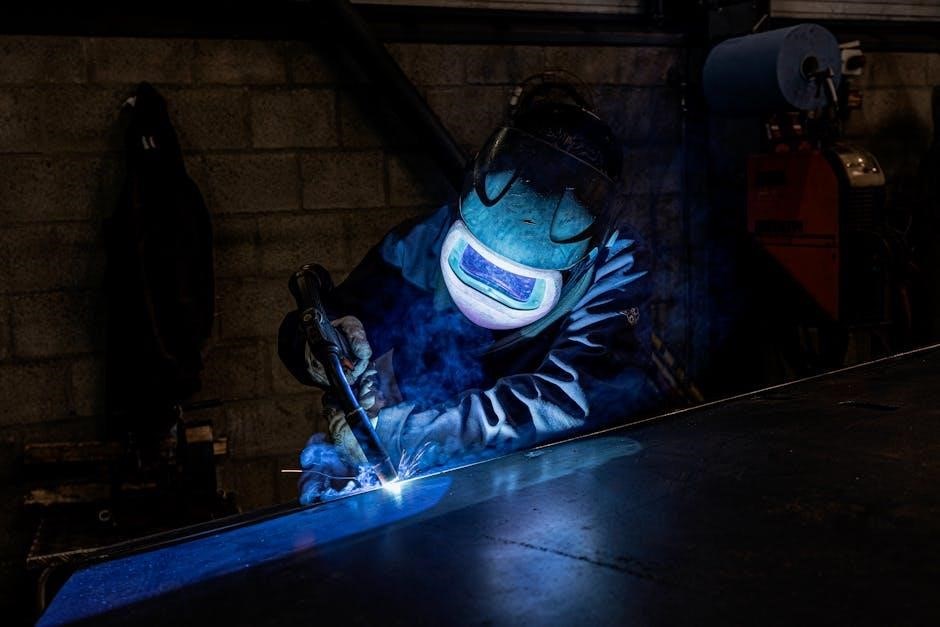
Maintenance and Troubleshooting
Regular upkeep ensures optimal performance. This section covers routine checks, power supply diagnostics, and resolving weld quality issues for the AC 225-S welder.
Routine Maintenance Schedule
Consistent maintenance extends the lifespan of your Lincoln AC 225-S. After each use, inspect cables for damage and clean the electrode holder and work clamp. Monthly, blow out dust and debris from the welder’s interior using compressed air – always disconnect power first!
Every six months, check and tighten all electrical connections. Annually, inspect the fan for proper operation and lubricate moving parts as needed. Verify the grounding system’s integrity. Regularly review the operator’s manual for specific recommendations. Proper care prevents costly repairs and ensures safe, reliable welding performance. Ignoring maintenance can lead to decreased efficiency and potential hazards.
Troubleshooting Common Issues — Power Supply
If the AC 225-S fails to power on, first check the input power source and circuit breaker. Verify the power cord is securely connected. Inspect the fuse – a blown fuse is a common culprit. If the unit hums but doesn’t arc, the transformer may be the issue, requiring professional diagnosis.
Low voltage can stem from incorrect voltage settings or a faulty voltage control. Overload protection may trip if the welder is pushed beyond its duty cycle. Always disconnect power before inspecting internal components. Consult a qualified technician for complex electrical issues; attempting repairs without expertise is dangerous.
Troubleshooting Common Issues — Welding Quality
Poor weld quality often results from incorrect amperage settings. Too low, and you’ll experience lack of penetration; too high, and you risk burn-through. Ensure proper electrode selection for the material being welded. Erratic arc behavior can indicate a loose ground connection or contaminated metal.
Porosity in welds may be caused by moisture or rust on the base metal or electrode. Spatter is common with AC welding but can be minimized with proper technique. Consistent weld beads require a steady travel speed and arc length. If issues persist, review electrode angle and work angle for optimization.
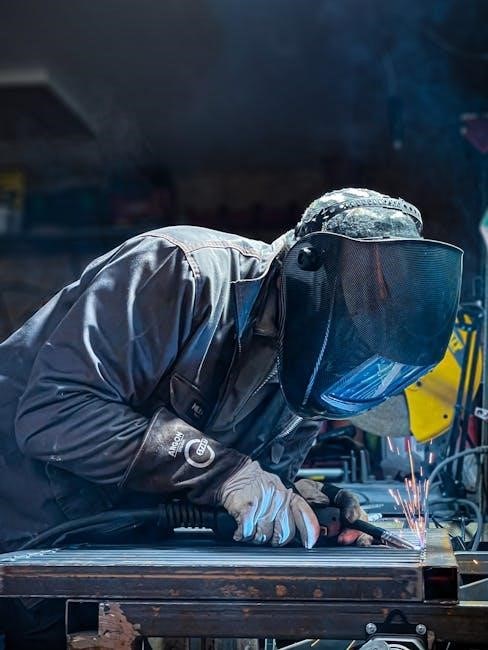
Safety Precautions
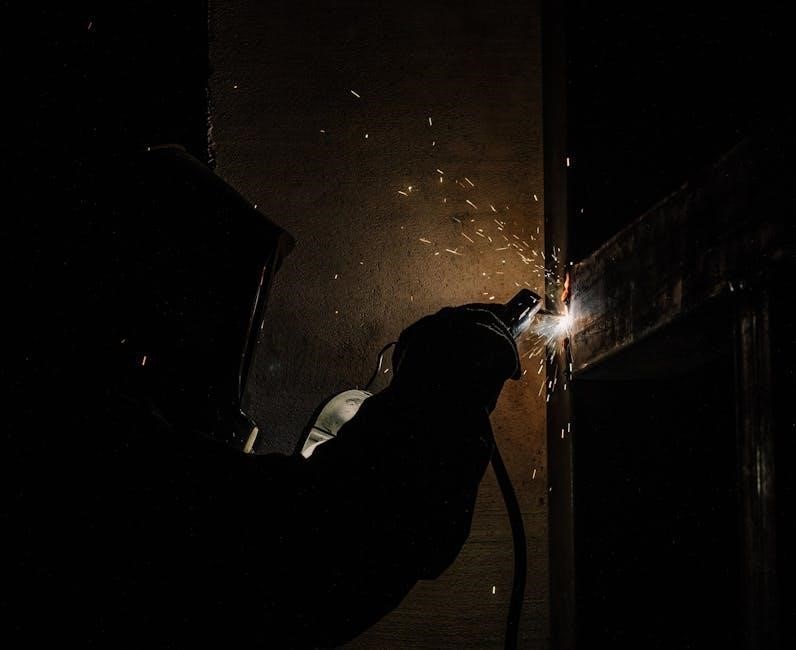
Always prioritize electrical safety, wear appropriate PPE (helmet, gloves, jacket), and ensure adequate ventilation to avoid fume inhalation during welding operations.
Electrical Safety Guidelines
Prioritize electrical safety when operating the Lincoln AC 225-S. Always inspect cables for damage before use, ensuring proper insulation. Never weld in damp environments or while standing in water. Disconnect input power when not welding or performing maintenance.
Ground the welding frame securely to minimize shock risk. Avoid touching live electrical parts. Utilize properly rated fuses and circuit breakers. Be aware of electromagnetic interference potentially affecting nearby devices. Regularly check grounding connections for integrity.
Remember, electricity is dangerous; follow all safety protocols diligently. Proper training and adherence to these guidelines are crucial for preventing accidents and ensuring a safe working environment.
Personal Protective Equipment (PPE)
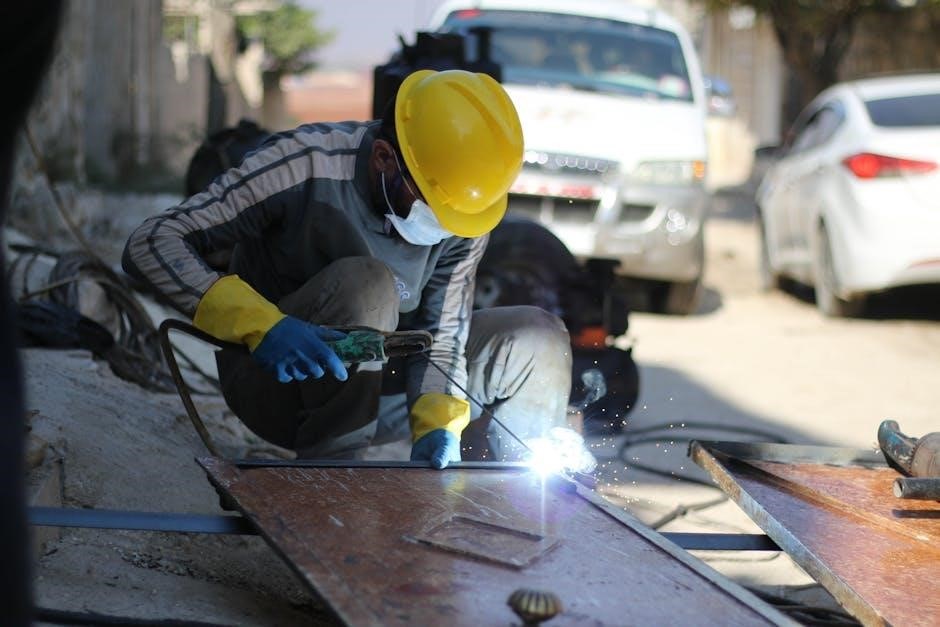
Essential PPE is critical when using the Lincoln AC 225-S. Always wear a welding helmet with the correct shade lens to protect your eyes from intense UV and infrared radiation. Use welding gloves, preferably leather, to shield hands from burns and electrical shock.
Wear flame-resistant clothing, such as leather jackets and aprons, to protect skin from sparks and spatter. Sturdy, closed-toe shoes are mandatory; Consider ear protection, especially in noisy environments. A respirator is recommended to avoid inhaling harmful fumes.
Proper PPE minimizes the risk of injury. Regularly inspect equipment for damage and replace as needed. Prioritize your safety and adhere to all PPE guidelines.
Ventilation and Fume Control
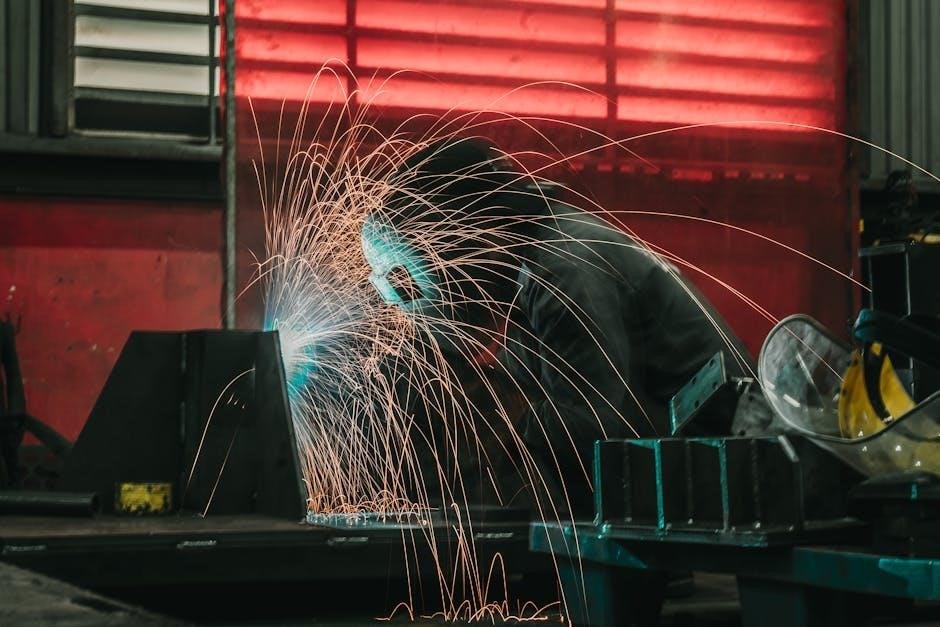
Welding with the Lincoln AC 225-S generates fumes harmful to your health. Adequate ventilation is paramount. Work in a well-ventilated area, ideally with a local exhaust ventilation system to remove fumes at the source.
If working indoors, open windows and doors to maximize airflow. Consider using a portable fume extractor for confined spaces. Be aware of the materials being welded, as different metals produce varying fume compositions.
Protect your respiratory system. A respirator is highly recommended, especially when ventilation is limited. Regularly monitor air quality and prioritize a safe working environment.
Parts and Accessories
Genuine Lincoln Electric parts ensure optimal performance. Accessories like electrodes, cables, and shielding gas enhance the AC 225-S’s capabilities and longevity.
Replacement Parts Availability
Securing replacement parts for the Lincoln AC 225-S is generally straightforward, thanks to its long production run and continued popularity. Many online retailers and welding supply stores stock common components like contact tips, nozzles, and drive rolls. However, availability of specific, older parts can vary.
Lincoln Electric’s website is a primary resource for locating parts, utilizing part numbers for precise identification. Part number M14009-1, for example, designates a nameplate. Independent welding equipment repair shops also often maintain inventories of frequently replaced items. Be prepared to provide the welder’s model and serial number when ordering to ensure compatibility and correct fit.
Common Accessories for the AC 225 S
Several accessories enhance the functionality and usability of the Lincoln AC 225-S. Essential items include welding cables, electrode holders, and ground clamps, available in various lengths and capacities. A welding helmet with appropriate shade is crucial for eye protection, alongside welding gloves and protective clothing.
Additional useful accessories are chipping hammers for slag removal, wire brushes for cleaning, and a welding cart for portability. Electrode storage boxes help keep electrodes dry and organized. Depending on the application, a remote foot pedal or hand control can provide greater welding control. These accessories are widely available from welding supply retailers.
Understanding Part Numbers (M14009-1 Example)
Lincoln Electric utilizes a specific numbering system for replacement parts; The part number, like M14009-1, provides crucial information for accurate ordering. The prefix (M14009) identifies the specific component, in this case, a nameplate for the AC-225-S welder.
The hyphenated number (-1) often denotes revisions or variations of the original part. Accurate part numbers ensure compatibility and proper fit. Referencing the welder’s parts list or contacting a Lincoln Electric distributor is vital when ordering. Using the correct part number prevents delays and ensures the welder’s continued optimal performance and safety.
Lincoln Nautilus & Related Vehicle Issues (Contextual Relevance)
Recent Lincoln vehicle reports detail dashboard electronics, suspension problems, and interior rattles. These issues, found in Nautilus, Aviator, and Corsair models, are noted.
Dashboard Electronic Issues (2024 Nautilus)
Numerous 2024 Lincoln Nautilus owners report significant dashboard electronic malfunctions. These range from incorrect profile displays and complete speaker failures to the entire dashboard going dark.
A critical consequence of the dashboard failure is the loss of A/C functionality, creating discomfort for drivers and passengers. One owner experienced this issue multiple times, requiring repeated diagnostic visits. The wireless charger also exhibits intermittent functionality, adding to the frustration.
These recurring problems suggest a potential systemic issue within the vehicle’s electronic architecture, impacting core features and overall user experience. Some owners are receiving credits or considering order cancellations due to these persistent concerns;
Suspension Problems (Nautilus & Aviator)
Reports indicate suspension issues are prevalent in both the Lincoln Nautilus and Aviator models, exceeding expectations for ride quality. Owners describe a harsher ride experience compared to anticipated levels, particularly over uneven road surfaces.
The advertised camera-based road scanning system, designed to proactively adjust the suspension for a smoother ride, appears to be underperforming. This system aims to mitigate bumps, but drivers are not consistently experiencing the promised plushness.
Experiences vary, but a common theme is a noticeable lack of improvement in ride comfort despite the advanced suspension technology. Further investigation and potential adjustments may be necessary to address these concerns.
Interior Rattles (Corsair)
Lincoln Corsair Reserve owners are reporting noticeable interior rattles, particularly when driving on less-than-perfect road surfaces. These sounds seem concentrated on the passenger side, specifically near the rear door or cargo area, creating a distracting driving experience.
Interestingly, the rattles aren’t unique; a loaner Corsair exhibited similar, though more pronounced, noises. This suggests a potential design or manufacturing issue affecting multiple vehicles, rather than isolated incidents.
The source of the rattles remains unidentified, prompting speculation about loose trim pieces or components within the door panels or cargo area. Addressing this issue is crucial for enhancing the Corsair’s overall refinement.
Lincoln Rejuvenate Feature & Availability
The Lincoln Rejuvenate feature faces delayed availability for the 2024 Nautilus, offering affected customers credits or order cancellation options.
Delayed Feature Rollout (2024 Nautilus)
Reports indicate a significant delay in the rollout of the Lincoln Rejuvenate feature for the 2024 Nautilus model. Customers anticipating this innovative feature are experiencing setbacks, impacting their initial vehicle experience. Lincoln is addressing the issue by offering two primary resolutions.
Firstly, affected owners are being provided with 200 credits applicable towards their vehicle build, potentially offsetting costs or enabling customization. Alternatively, customers have the option to cancel their existing Nautilus orders entirely, allowing them to explore alternative vehicle choices. This situation highlights unforeseen software integration challenges and Lincoln’s commitment to customer satisfaction through flexible solutions.

Lincoln Continental Mark Series Discussions
This forum fosters discussions about the historical Lincoln Continental Mark series—Mark II through Mark VI— focusing on their significance and collector appeal.
Historical Significance of the Mark Series
The Lincoln Continental Mark series represents a pivotal era in American automotive luxury. Beginning with the Mark II in 1956, these vehicles established a tradition of elegant styling and powerful performance. Each subsequent generation – Mark III, IV, V, and VI – refined this formula, often incorporating innovative features and design cues.
These cars weren’t simply transportation; they were statements. They catered to a clientele desiring sophistication and exclusivity. The Mark series consistently offered a blend of comfort, technology, and a distinctive presence on the road. Discussions often center on original features, restoration projects, and the enduring legacy of these iconic vehicles, solidifying their place in automotive history.